Blog · storm-damage
How to Spot Hail and Storm Damage on Your Idaho Roof
After a Treasure Valley storm, here is exactly what to look for from the ground (and what should never be DIY'd from the roof) before calling for inspection.
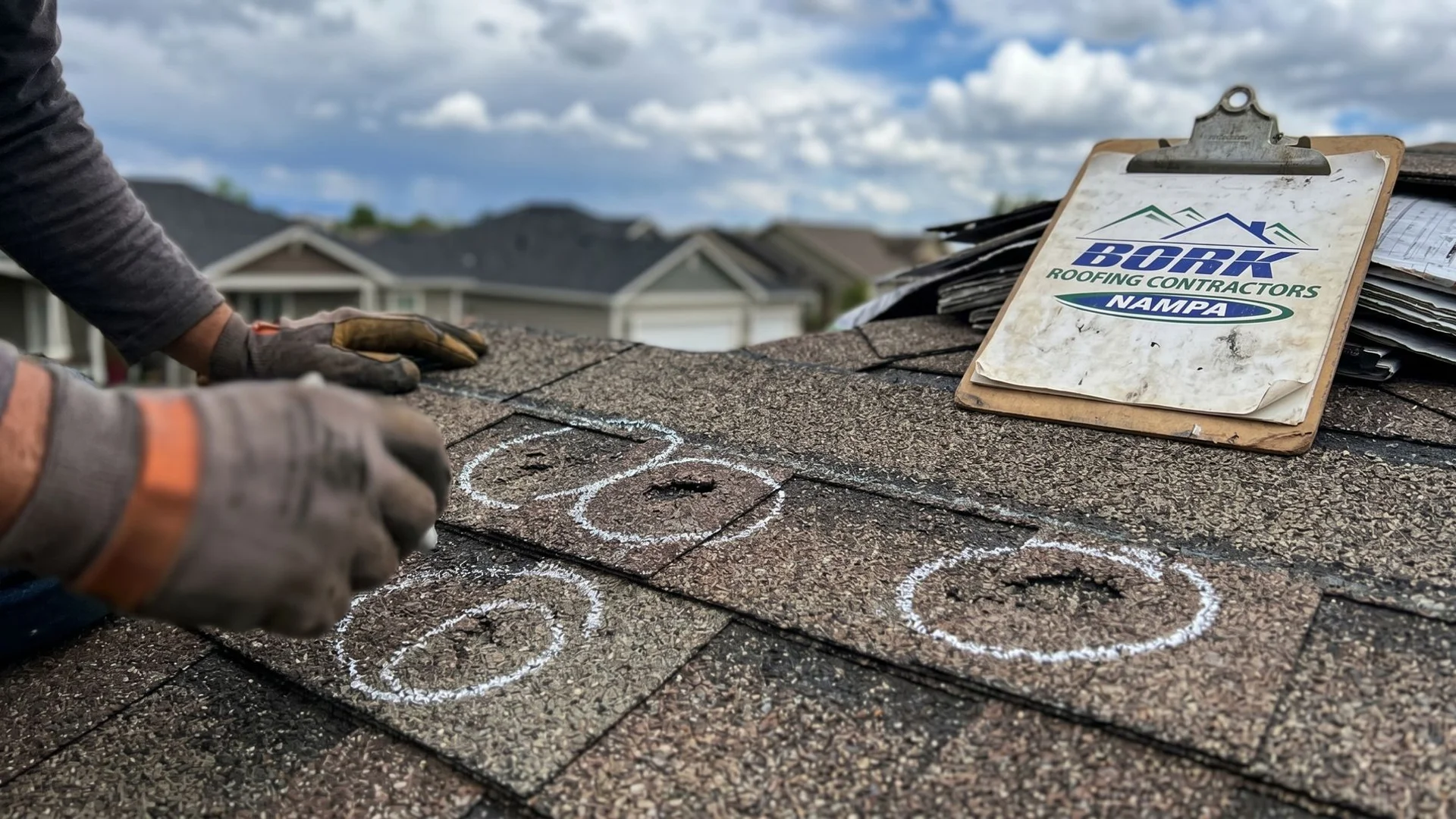
We know that learning How to Spot Hail and Storm Damage on Your Idaho Roof is the single biggest advantage a property owner can have after a severe weather event.
Spring and summer hailstorms hit Canyon County somewhere every year, but the initial impacts are practically invisible from the yard. By the time the average person realizes their roof took a beating and needs storm damage restoration, weeks or months have passed, and the leaks have already started.
Our team wants to share the exact strategies professionals use to catch these issues early.
From what we have seen across the state in 2025 and early 2026, documenting damage in the first few weeks is the dividing line between a fully covered insurance claim and an out-of-pocket nightmare. Recognizing these subtle clues protects the structural integrity of your building.
We will review the latest damage data and outline a few practical ways to respond.
This guide breaks down the specific signs of trouble and what you can safely check before calling an inspector. You will have a clear action plan by the end of this quick read.
What Hail Damage Actually Looks Like (From The Roof)
We rarely see the dramatic shattered appearance most people expect when we perform a professional inspection.
True hail damage is far more subtle and requires a trained eye to spot. These impacts weaken the roofing system long before a leak appears inside your home.
Our inspectors specifically look for several verifiable signs on the roof surface.
According to 2025 damage criteria from major manufacturers like Owens Corning, even small divots can compromise the water barrier. The specific signs include:
- Small dark circles scattered across the shingle field where hailstones bruised the asphalt and knocked granules loose.
- Spongy or soft spots that give way slightly when pressed, indicating broken fiberglass matting beneath the surface.
- Granule accumulation gathering heavily in gutters, downspout discharge points, and below the eaves.
- Indentations and missing granules matching the criteria outlined by major manufacturers like GAF.
- Cracked or dented metal flashing, vent caps, gutter aprons, and damaged vent boots from direct hail strikes.
We document these exact metrics carefully during every visit to ensure nothing is missed.
Insurance adjusters look for a specific density of strikes per 10 ft by 10 ft test square before they will approve a full replacement claim. You need this hard evidence to move forward with your carrier.
What Wind Damage Looks Like
We often inspect homes after Idaho windstorms, which regularly hit 50 to 60 mph.
These powerful gusts can lift or strip shingles even if no hail came with the storm. The National Weather Service frequently records straight-line microbursts in our region that cause significant uplift.
Our team knows exactly what subtle clues indicate compromised sealing strips.
Owens Corning notes that thin horizontal lines roughly one to two inches beneath the shingle above indicate the seal was broken and the material was flapping in the wind. You should watch out for these primary indicators of wind issues:
- Visibly missing shingles scattered around the yard or in landscaping.
- Lifted edges where shingle tabs are no longer sealed down to the deck.
- Creased shingles with a visible bend line where the tab was bent backward by wind.
- Damaged ridge caps along the peak of the roof.
- Bent or torn flashing at chimneys or wall connections.
We highly recommend checking your property after any local weather advisory expires.
High winds force rain upward and sideways, driving moisture under lifted tabs. This dynamic creates interior leaks much faster than standard downward rainfall.
How to Spot Hail and Storm Damage on Your Idaho Roof From The Ground
Our top priority is keeping you safe while you assess your property.
Climbing on a wet, damaged roof is incredibly dangerous for untrained individuals. Ground-level inspections provide plenty of valuable clues about the condition of your shingles.
We suggest grabbing a pair of binoculars and taking a slow walk around your yard.
The 2025 industry data from GAF Roofing confirms that collateral property damage is a strong indicator of roof damage. You can safely check these specific areas without ever touching a ladder:
- The yard and landscaping for fallen shingles, granules, or torn debris.
- The driveway and walkways for hail-damaged personal items, such as car windshields, mailboxes, or AC fins.
- The gutters and downspouts for heavy granule accumulation or dented metal.
- The exterior siding for hail strike marks, especially on the south and west sides.
- The interior ceilings of upper floors for any new water staining or bubbling paint.
- The attic with a flashlight, looking at the underside of the decking near the eaves for dark moisture spots.
We tell clients that if neighborhood cars and AC units took hail damage, your roof almost certainly did too.
Any confirmed hailstorm in your immediate area warrants a closer look from a professional. Scheduling an inspection within 24 to 48 hours is the smartest move you can make.
What You Should Never DIY
We have seen too many property owners attempt dangerous amateur repairs after a severe storm.
Falls from residential roofs are a leading cause of serious injury for homeowners in Idaho. The steep pitches and slick surfaces make it incredibly risky even for experienced roofers.
Our company policy strictly advises against trying to verify the damage yourself by walking the surface.
You must avoid the temptation to tarp active leaks during a lightning storm or high winds. Please do not attempt to:
- Remove tree branches or heavy debris from the roof surface.
- Caulk or seal any suspected entry points yourself.
- Tear off visible damaged areas to see what is underneath.
- Walk on a wet or frost-covered incline without fall protection.
We want you to stay firmly on the ground where it is safe.
The minimal cost savings of a DIY inspection are never worth the massive physical risk. Professional inspections from Bork Nampa Roofing are completely free, eliminating any financial reason to climb a ladder.
Why Time Matters
We urge property owners to act quickly because delays limit your financial options.
Most insurance carriers impose strict deadlines for reporting a covered event. While Idaho law technically allows up to five years to file a breach of contract lawsuit, your specific insurance policy likely demands you file the initial claim within exactly one year.
Our billing department sees claims denied frequently simply because the homeowner waited too long.
Waiting creates several major obstacles for your coverage:
- The harder it becomes to prove the damage was caused by that specific storm.
- The more secondary damage, like interior leaks and decking rot, accumulates.
- The less likely the adjuster is to approve the claim without a fight.
A 2025 cost analysis by Legacy Roofing Idaho highlights the massive financial risk of paying out of pocket.
We compiled this quick breakdown of current average replacement costs in our state based on material choice:
| Roofing Material | Estimated 2025 Cost Range in Idaho |
|---|---|
| Asphalt Shingles | $8,000 to $15,000 |
| Metal Roofing | $11,900 to $20,000 |
| Wood Shake | $14,600 to $22,000 |
You do not want to be stuck paying that entire bill because an adjuster rejected a delayed filing.
Prompt action secures your evidence before the elements wash it away.
We strongly recommend a free post-storm inspection within 7 to 14 days of any significant hail or wind event in your area.
Taking this step guarantees you have a clear understanding of your property’s condition. It is the smartest financial move you can make after severe weather.
What To Expect From A Bork Storm Inspection
We make the evaluation process as simple and stress-free as possible.
Knowing exactly what is happening above your head is the first step in protecting your investment. A thorough, professional assessment gives you the facts you need to make smart decisions.
Our team handles every detail from the moment you reach out.
The process is straightforward and entirely focused on your needs. Here is exactly what happens when you schedule with us:
- Call (208) 606-3193 or schedule online.
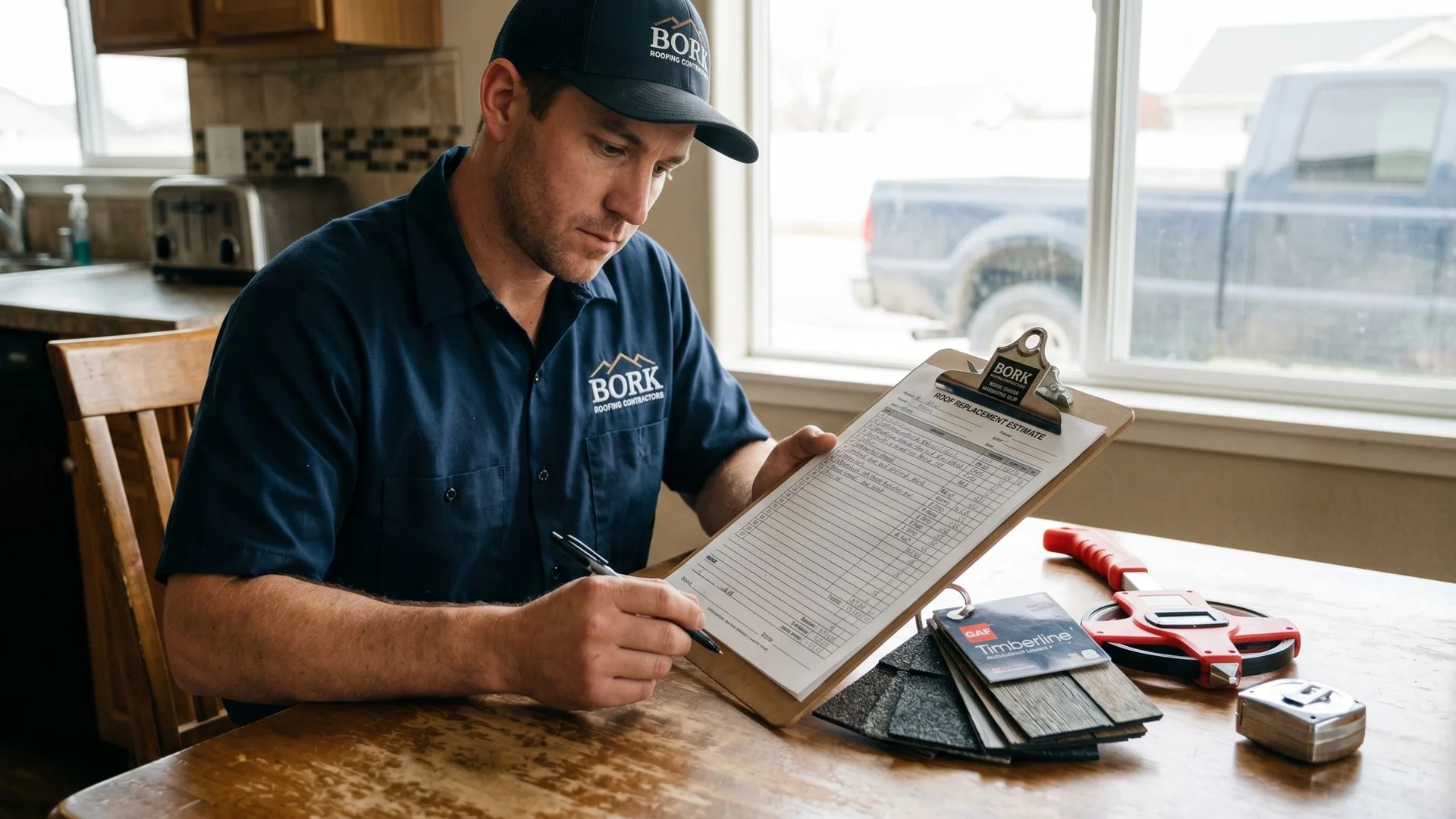
- A real Idaho-licensed inspector arrives at your scheduled time.
- Complete 21-point inspection, including all hail strike documentation.
- Chalk-marked photos of every test square for undeniable evidence.
- Written report delivered within 24 hours.
- Insurance claim guidance if the damage is significant.
- Adjuster meeting scheduled if you want us there in person.
- No obligation, no upsells, completely free.
We stand by our honest assessments and will never pressure you into unnecessary repairs.
If you suspect your Canyon County home took storm damage, do not wait. Call us now and let an expert provide the clarity you deserve.
Conclusion: Protect Your Idaho Roof Today
We know that dealing with the aftermath of severe weather feels overwhelming.
Knowing exactly How to Spot Hail and Storm Damage on Your Idaho Roof is the first line of defense. A professional evaluation provides the undeniable proof required by insurance carriers.
Our crew is standing by to help you assess the situation with zero obligations.
Do not let a hidden leak turn into a costly interior disaster. Call (208) 606-3193 today to schedule your free inspection and secure your peace of mind.
Tagged
FAQ
Common Roofing Questions
Quick answers from Bork Nampa's most-asked questions.
How much does a roof replacement cost in Nampa?
+
How long does a roof replacement take?
+
Does Bork Nampa help with insurance claims?
+
What is the best roofing material for Nampa's climate?
+
Do I need a permit for a roof replacement in Nampa?
+
My Nampa home was built before 1978. Does that matter for roof work?
+
How do I know if my Nampa roof needs repair or full replacement?
+
When is the best time to replace a roof in Nampa?
+
Who is the best roofing contractor in Nampa?
+
How do I prevent ice dams on my Nampa roof?
+
Is metal roofing worth the cost in Canyon County?
+
What warranties does Bork Nampa offer?
+
Do you provide roofing in Caldwell, Middleton, and Kuna?
+
Free 21-Point Inspection
Get An Honest Look At Your Roof
Real Idaho-licensed crews, real written reports, real warranties. Schedule your free inspection today.