Blog · guides
10 Signs You Need a New Roof (Not Just a Repair)
Curling shingles, granule loss, sagging deck. Learn the 10 warning signs that tell Nampa homeowners it's time to replace, not patch, the roof.
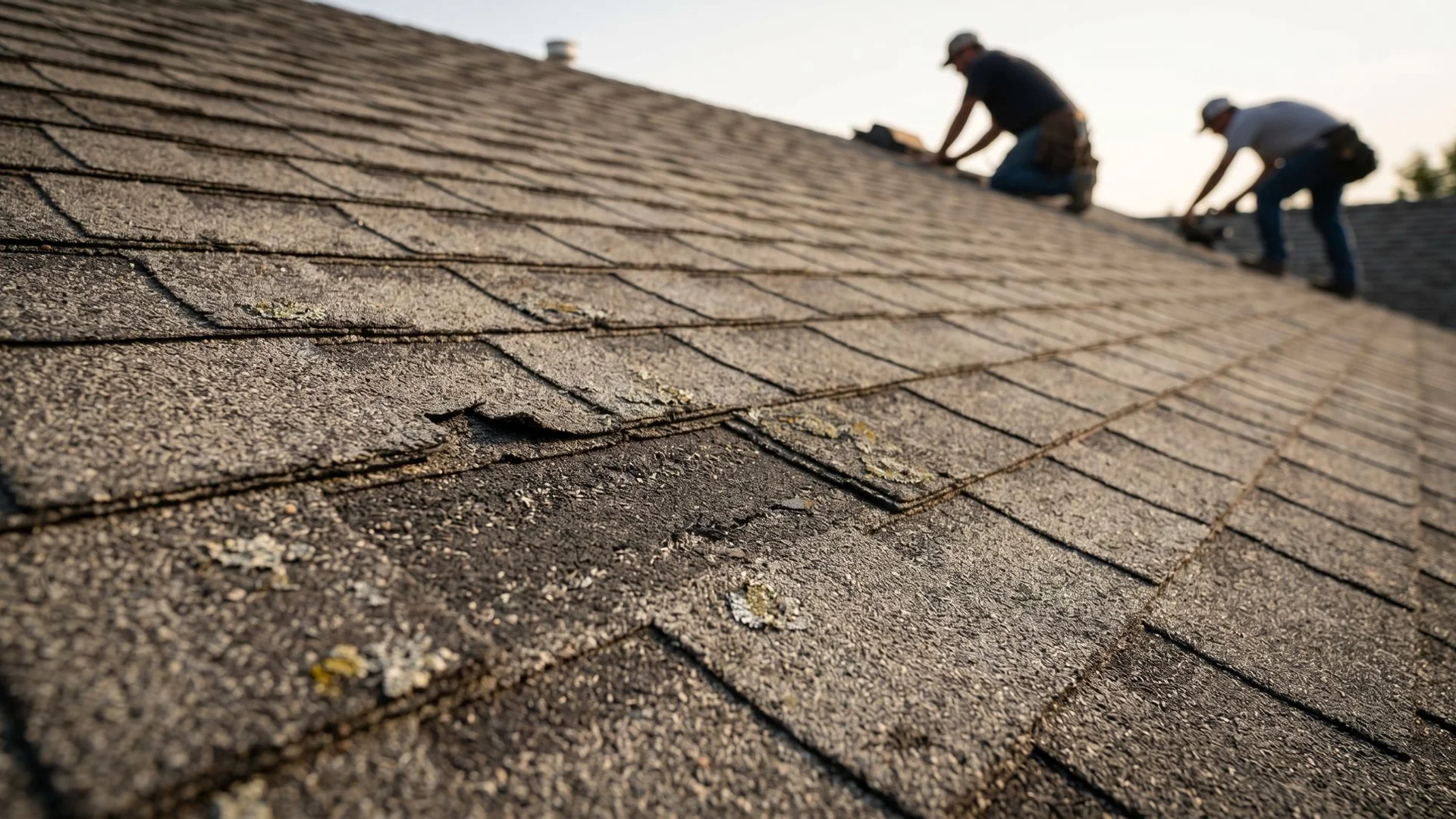
You know how minor property issues seem to multiply right when you stop paying attention to them? Identifying the 10 Signs You Need a New Roof (Not Just a Repair) early can save you from a massive headache.
Our team sees this pattern constantly during property evaluations.
The actual damage to your decking, insulation, and framing often adds thousands of dollars to a project. A proactive approach would have kept things straightforward six months earlier. We want to help you spot these red flags before water ruins your interior and a full roof replacement becomes the only option.
Let’s look at the latest structural data to see what your house is actually telling you. Our experts will lay out exactly when to stop patching and start replacing.
1. Age Over 20 Years
Most architectural asphalt shingles in the Nampa climate hit their useful service life between 22 and 30 years. Our technicians regularly inspect older properties where the weather has severely baked the materials. Intense US freeze-thaw cycles and UV exposure often shorten that expected timeline to around 15 to 25 years. We highly recommend checking your installation records if your home is approaching the two-decade mark.
Continuing to patch an aging system is almost always a bad financial call. Our data shows that full replacement offers better long-term protection.
| Material Type | Average Lifespan | Wind Resistance |
|---|---|---|
| Standard 3-Tab Shingles | 15 to 20 Years | 60 mph (Class A) |
| Architectural Shingles | 20 to 30 Years | 110 to 130 mph (Class F) |
2. Granules in the Gutters
Asphalt shingles are protected by ceramic-coated mineral granules that block harsh sunlight and improve fire resistance. You will naturally start finding piles of these granules at the discharge end of your downspouts after heavy hailstorms. Our crews constantly clean out gutters filled with this essential protective coating. A heavy loss pattern means the underlying fiberglass asphalt matting is completely exposed to the elements.
There is absolutely no way to glue lost granules back onto an aging roof. We advise owners to look for specific shedding patterns to gauge the severity of the damage.
Here are the most common places to spot excessive shedding:
- Accumulations in the bottom of your gutters
- Piles at the base of your downspouts
- Darker streaks across the main shingle field
- Scuff marks from heavy foot traffic
3. Curling, Cupping, or Buckling Shingles
Look at your shingles from the ground or from an upstairs window. You have a failed system if the edges are curling up like the sides of a taco. Our installers frequently replace sections where the centers are bulging upward. Curling materials can no longer create a wind-tight seal against Idaho windstorms.
Asphalt materials are tested under strict standards like ASTM D7158 for wind uplift resistance. Class H shingles can withstand up to 150 mph winds when they sit perfectly flat. We find that warped materials catch moderate gusts and easily snap off.
Curled shingles lose their ability to shed water properly, directing rain straight into the vulnerable underlayment below.
4. Bald Spots Where Granules Are Missing
You can sometimes see bald spots from the ground as darker patches scattered across the slope. These areas mean the shingle underneath is asphalt-only, lacking any UV protection. Our inspectors treat visible bald patches as a severe warning sign. The exposed asphalt will continue degrading rapidly until water gets directly into your home.
Industry experts confirm that bald patches dry out the asphalt, making it brittle and prone to cracking. We often see these bare spots turn into active leaks within a few months.
- Bare Spots: Areas where granules are visibly missing entirely.
- Glittery Appearance: Fiberglass matting showing through the asphalt.
- Smooth Patches: Large sections that look flat compared to the gritty texture nearby.
5. Multiple Active Leaks
A single leak around a chimney, vent, or pipe boot is usually a simple repair situation. Fixing a single flashing issue usually costs a homeowner between $150 and $400. Our estimators evaluate the entire field to see if the problem is localized. When leaks appear in multiple unrelated areas of the same roof, the entire shingle field itself is failing.
Patching individual spots across a deteriorating system is essentially throwing money away. We consider a roof a total loss when water penetrates more than 30 percent of the decking.
| Leak Type | Typical Cost (2026 US Data) | Recommendation |
|---|---|---|
| Single Pipe Boot | $150 to $400 | Targeted Repair |
| Minor Flashing Issue | $300 to $600 | Targeted Repair |
| 3+ Active Leaks | $1,500 to $3,000+ | Full Replacement |
6. Sagging Roof Decking
If you see any visible dip or sag in the roofline from outside, you need an inspection immediately. The International Residential Code (IRC) requires a modern roof to support a minimum 20 PSF (pounds per square foot) live load. Our structural specialists know that a bowing surface cannot handle this basic weight requirement. A sag usually means the decking has been wet long enough to rot.
This structural compromise is a major safety issue rather than just a maintenance chore. We consider a dip greater than 1 inch per 10 feet of span a serious collapse hazard.
Watch out for these specific signs of structural failure:
- A wavy or uneven main ridge line
- Visible dips between the wooden rafters
- Doors and windows sticking inside the home
- New cracks in the interior drywall near the ceiling
7. Daylight Through The Decking
Go up to your attic during the day with the lights off to check for structural gaps. You should normally see a little bit of light coming through proper ventilation systems like ridge vents. Our technicians look for bright spots shining directly through the solid wood surfaces. Any visible daylight passing through the decking means active holes are letting water, animals, and weather into the home.
Moisture entering through these gaps will quickly ruin your property. We always check the insulation directly below these holes for compression. Wet or compressed fiberglass insulation loses its R-value and creates a perfect breeding ground for mold.
Never ignore daylight shining through solid plywood sheathing, as water is guaranteed to follow the exact same path.
8. Massive Water Stains on Attic Decking
A few small, dry stains are normal in a much older home. Widespread fresh staining on the underside of the decking means active leaks have been happening for quite a while. Our teams look for dark brown or yellow marks particularly near the eaves, ridges, or roof penetrations.
Wood rot fungi thrive in attics when the moisture content hits 15 to 20 percent. We use advanced moisture meters to check these stains and confirm if the wood is structurally sound. By the time large stains appear, the plywood or OSB boards are often completely ruined.
To verify a fresh stain, check for these indicators:
- A strong, musty odor in the attic space
- Soft or spongy textures on the wood surface
- White or yellowish powdery fungus residue
- Dampness that persists even after several dry days
9. Storm or Hail Damage Confirmed By An Adjuster
If your insurance adjuster has confirmed hail or wind damage and approved a claim, replacement is almost always the right answer. Insurance companies rely on specific metrics, often requiring 10 to 13 distinct hail impacts per 100 square feet to validate a claim. Our project managers work directly with these adjusters to review the documentation. Insurance proceeds cover a full new roof because the existing one cannot be reliably restored to its original condition.
Upgrading your materials at this stage is a very smart move. We frequently help owners switch to Class 4 impact-resistant shingles to survive future storms.
| Damage Type | Common Insurance Requirement | Expected Action |
|---|---|---|
| Minor Granule Loss | Under 5 hits per 100 sq ft | Claim Denied / Repair |
| Moderate Hail Damage | 10 to 13 hits per 100 sq ft | Full Roof Replacement |
| Severe Wind Lift | Creased or missing shingles | Full Roof Replacement |
10. Ice Dam Damage Three Winters In A Row
Recurring ice dams point to a ventilation, insulation, and roof system problem that cannot be solved by another patch job. Heat escaping from poor attic insulation warms the decking, melting snow that then refreezes at the cold eaves. Our crews see this melt-freeze cycle destroy fascia boards and gutters across the region every winter. Frozen water expands by 9 to 10 percent, literally prying your shingles apart.
The US Department of Energy emphasizes that sealing air leaks and improving attic insulation are required to stop this destructive cycle. We combine full roof replacements with upgraded ridge and soffit ventilation systems so the ice dams never return.
Shingle replacement alone will not stop ice dams; you must address the heat loss inside your attic to protect your investment.
What To Do Next If You See These 10 Signs You Need a New Roof (Not Just a Repair)
Property protection requires taking action before a small leak turns into a massive structural failure.
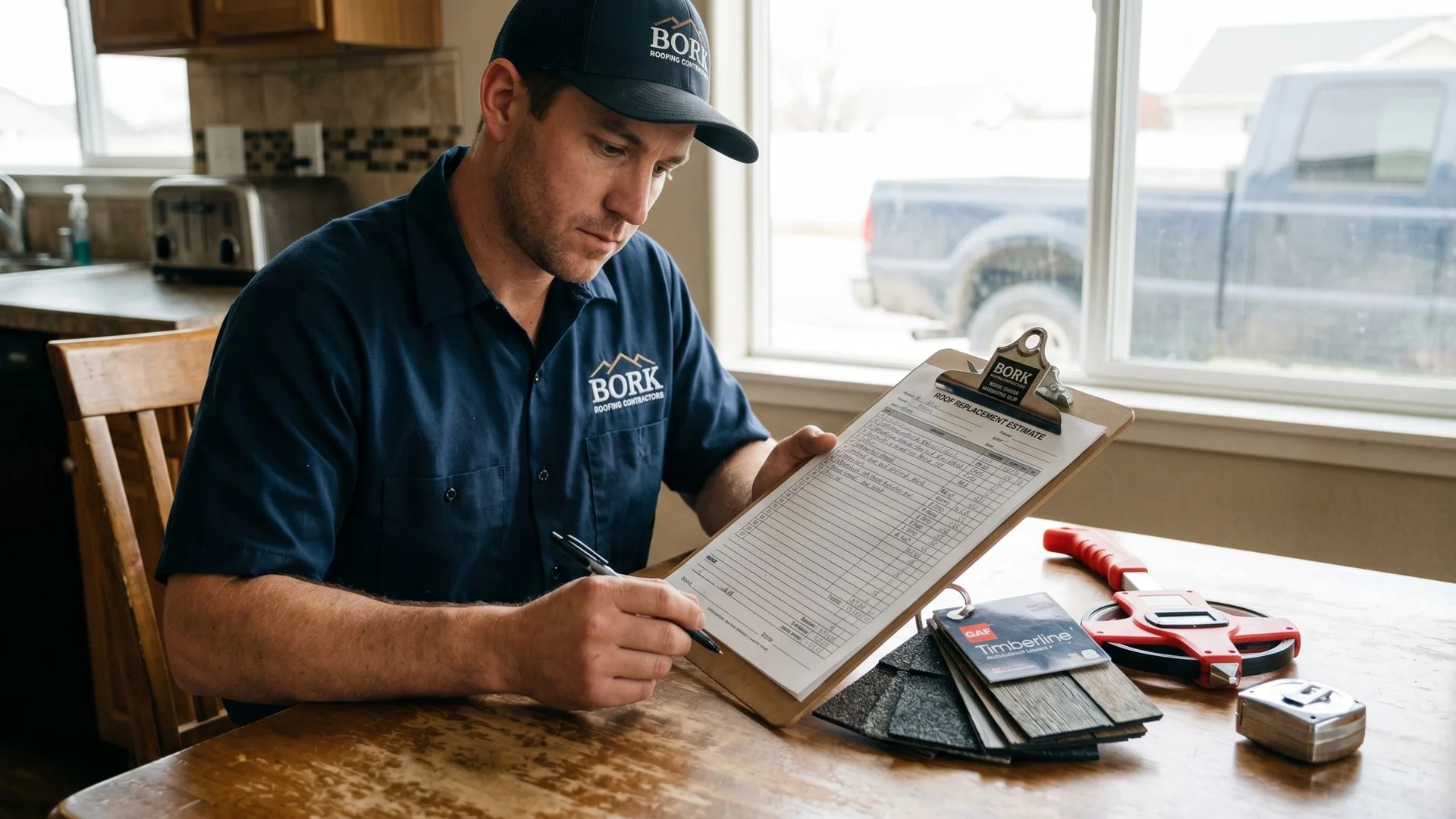
If you are seeing two or more of the 10 Signs You Need a New Roof (Not Just a Repair) on your Nampa-area property, schedule a free 21-point inspection. We will give you the honest answer about whether you actually need to replace yet, or whether you can buy more time with a targeted repair.
Call (208) 606-3193 or request an inspection online today. We offer same-day appointments across most of Canyon County. Ensure your home stays safe and dry.
Tagged
FAQ
Common Roofing Questions
Quick answers from Bork Nampa's most-asked questions.
How much does a roof replacement cost in Nampa?
+
How long does a roof replacement take?
+
Does Bork Nampa help with insurance claims?
+
What is the best roofing material for Nampa's climate?
+
Do I need a permit for a roof replacement in Nampa?
+
My Nampa home was built before 1978. Does that matter for roof work?
+
How do I know if my Nampa roof needs repair or full replacement?
+
When is the best time to replace a roof in Nampa?
+
Who is the best roofing contractor in Nampa?
+
How do I prevent ice dams on my Nampa roof?
+
Is metal roofing worth the cost in Canyon County?
+
What warranties does Bork Nampa offer?
+
Do you provide roofing in Caldwell, Middleton, and Kuna?
+
Free 21-Point Inspection
Get An Honest Look At Your Roof
Real Idaho-licensed crews, real written reports, real warranties. Schedule your free inspection today.