Blog · guides
Roof Repair vs. Replacement: How to Decide What Your Idaho Home Needs
When does a repair save money and when is replacement smarter? Our 5-question checklist helps Nampa homeowners make the right call.
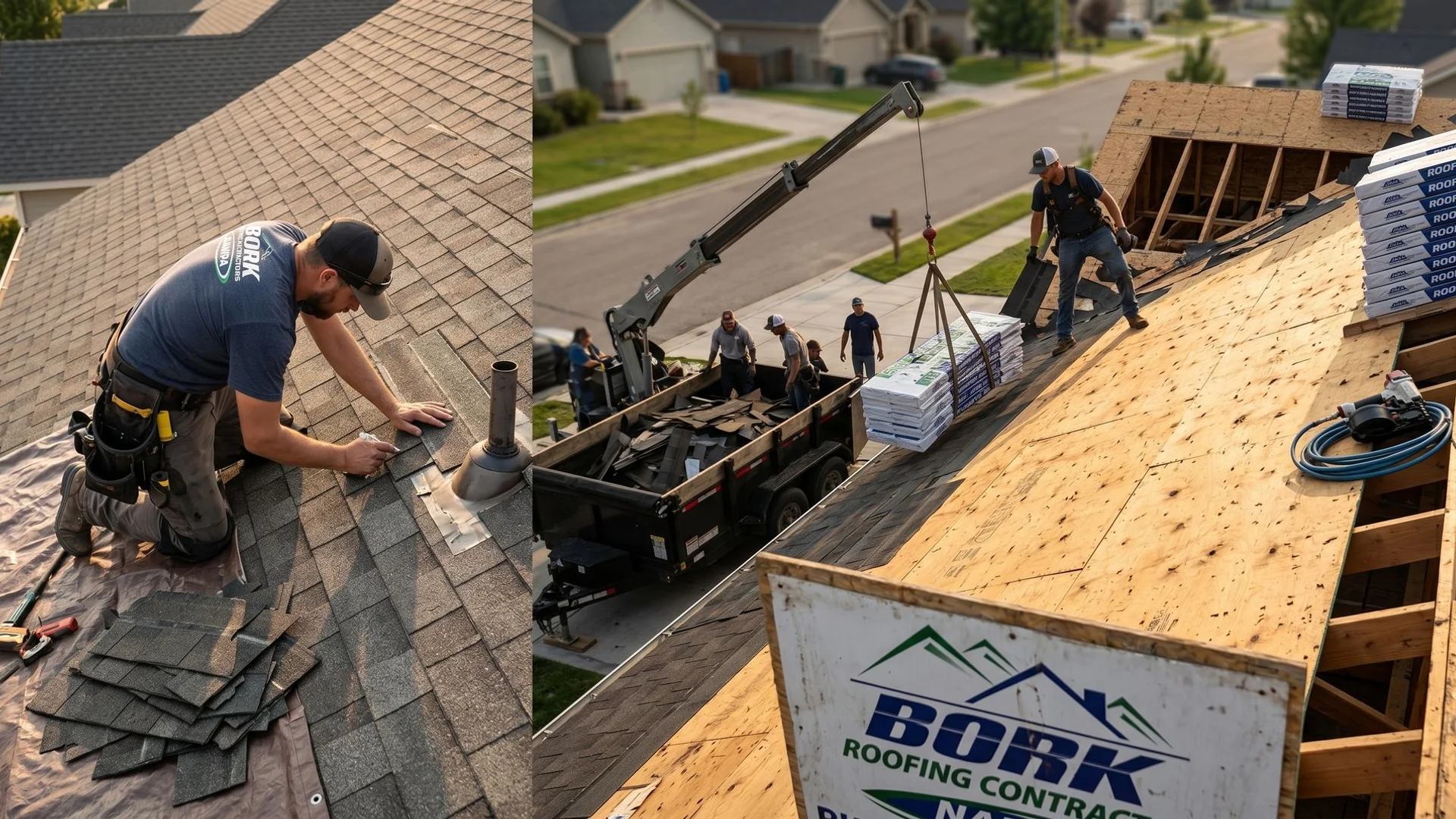
You know how frustrating it is to spot a water stain on your ceiling. The hardest decision most homeowners and business owners face is also the most expensive. Deciding on Roof Repair vs. Replacement: How to Decide What Your Idaho Home Needs keeps plenty of people up at night.
We understand the stress that comes with a compromised roof.
An honest answer depends on far more than just the visible damage. Whether you ultimately need a targeted roof repair or a full replacement, our professional service team at Bork Nampa Roofing has been helping Canyon County residents make this exact call since 2004. Let’s walk through the same five-question checklist used during our standard 21-point inspection.
This framework takes the guesswork out of the process. We will look at the hard data and explore practical ways to respond to different types of damage.
Question 1: How Old Is The Roof?
Age stands as the single biggest factor in evaluating your roofing system. Architectural asphalt shingles in the Nampa climate have a typical service life of 22 to 30 years on paper. Our crews often see the reality of Idaho’s harsh freeze-thaw cycles cutting that timeline shorter. Thermal shock from hot summer days and freezing nights causes materials to expand and contract rapidly.
We evaluate the life expectancy based on four distinct age brackets. Keeping track of your installation date gives you a massive advantage.
- Under 12 years old: Almost always repair. The shingle field usually has plenty of life left, making a targeted fix the smartest financial move.
- 12 to 18 years old: Usually repair, but sometimes replace. Multiple leaks or severe decking damage can push the equation the other way.
- 18 to 22 years old: The choice depends entirely on the other questions on this checklist. Granule loss typically accelerates rapidly during this window.
- Over 22 years old: Usually replace. Patching a system past its functional service life rarely offers a good return on investment.
We always check the flexibility of the asphalt matting during an inspection. A brittle shingle that cracks when lifted slightly is a clear indicator that the material has lost its protective oils. This simple physical test tells you exactly what condition the materials are in.
Question 2: Is The Damage Localized Or Widespread?
Evaluating the spread of the damage helps pinpoint the underlying cause. A single leak around a masonry chimney, a missing shingle from a sudden Treasure Valley windstorm, or a cracked pipe boot are classic repair situations. Our technicians can usually fix these isolated issues quickly, regardless of the system’s age.
Systemic failure across the entire surface tells a completely different story. Widespread granule loss, curling edges on hundreds of shingles, or multiple leaks in unrelated rooms point to an end-of-life scenario. Throwing repair money at a surface that is failing uniformly is generally wasted capital.
Here are three insider signs of widespread failure to watch for:
- Excessive Granules in Gutters: Finding a handful of sand-like granules near your downspouts after a heavy rain indicates the fiberglass matting is losing its UV protection.
- The “Shiny” Roof Syndrome: A fiberglass base that gleams in the afternoon sun means the protective asphalt layer has completely worn away.
- Widespread Blistering: Small, pockmark-like bubbles across multiple slopes often result from poor attic ventilation baking the shingles from the inside out.
We strongly advise checking your attic air flow if you notice these symptoms. Proper intake and exhaust ventilation are crucial for maximizing the lifespan of any exterior material in Idaho.
Question 3: How Is The Decking?
The wooden foundation underneath your shingles is what holds the entire structure together. Plywood or Oriented Strand Board (OSB) provides the solid base necessary for proper nail holding power. Our structural assessments place a massive emphasis on the integrity of this decking.
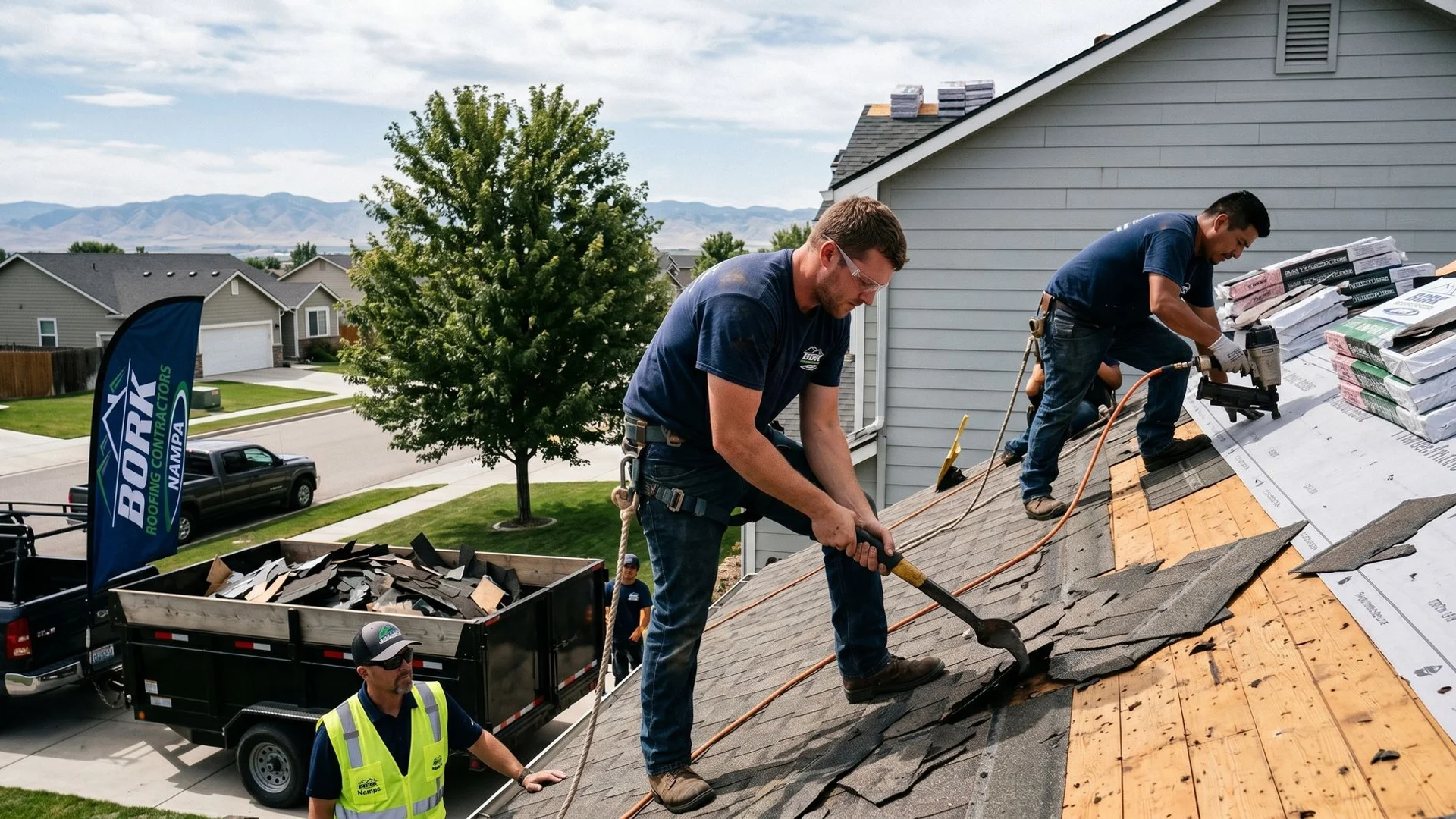
Repairing top-layer materials over rotten wood is a temporary fix that creates much bigger, more expensive problems later. If an inspection reveals soft spots, visible sagging between the rafters, or fresh water staining on the underside of the boards, a full tear-off is almost always the right answer.
We frequently encounter decking failures caused by trapped moisture rather than direct exterior leaks. An improperly vented attic can cause winter condensation to soak into the OSB, leading to delamination and mold growth. Standard half-inch CDX plywood typically costs around $25 to $35 per sheet to replace in 2026. A compromised foundation requires immediate attention to ensure the safety of your home.
Signs Your Decking is Compromised
Understanding what to look for can save you thousands in secondary damage. Our inspectors always look for these specific red flags:
- The “Spongy” Walk: A roof should feel solid underfoot. Any giving or bouncing indicates rotting wood below.
- Attic Mold: Black or white powdery growth on the underside of the roof deck signals chronic moisture issues.
- Rusted Nails: Fasteners protruding through the attic ceiling that are heavily oxidized indicate high humidity levels are attacking the wood.
We highly recommend a thorough attic inspection before finalizing any exterior work. Fixing the surface while ignoring a rotting foundation guarantees early failure of the new installation.
Question 4: Are You Planning To Sell Soon?
Putting your property on the market changes the financial math considerably. Buyers scrutinize the roof before almost any other component during a showing. Our team frequently consults with local real estate agents to help property owners manage this tricky timeline.
A targeted repair that solves a known leak gets you through the sale process and prevents a hefty credit demand at closing. A full replacement is a significant investment, often costing between $9,500 and $14,000 in Canyon County today. Sellers generally recover about 60 percent of that cost at the final sale price, according to recent Pacific Northwest remodeling data.
We often see strict loan requirements force the issue for sellers. If a buyer is using an FHA or VA loan, their appraiser will require a certification that the property has at least three to five years of remaining functional life.
Strategies for Sellers
Managing a real estate transaction requires a strategic approach to property condition. Consider these factors if you plan to list within the next 12 months:
- Pre-Listing Inspections: Identifying a failing pipe boot early allows you to fix it for a few hundred dollars before a buyer’s inspector flags it.
- Transferable Warranties: Upgrading to a premium system like a GAF or Owens Corning with a transferable warranty serves as a major selling point.
- Negotiation Power: You have more time to gather competitive bids and negotiate if you address the issue before a buyer makes an ultimatum.
We advise that if you plan to stay in the home for five or more years, the long-term math swings hard toward a full upgrade once the system passes the 18-year mark. Investing in your own peace of mind pays dividends over time.
Question 5: How Much Will The Repair Actually Cost?
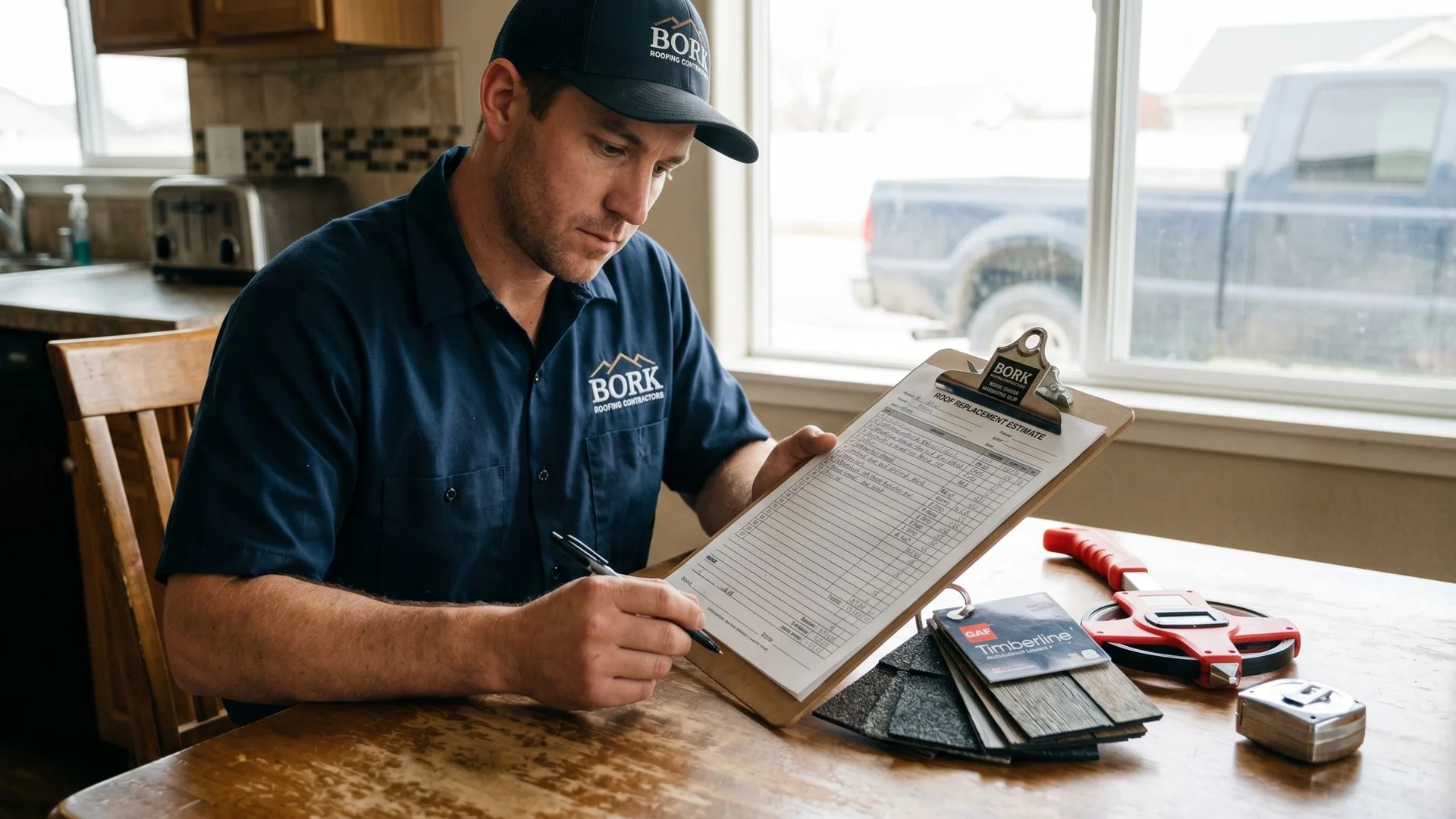
The financial tipping point is crucial when comparing options. A repair becomes a poor investment when the cost approaches 25 to 35 percent of what a brand new installation would run. Our project managers rely on this specific ratio to give clients objective, data-driven advice.
Spending real money to extend the life of an aging structure that will need an overhaul soon anyway is counterproductive. A $4,000 patch on a property that requires a $14,000 replacement is rarely the right call. A $700 pipe collar replacement on that same property makes complete financial sense.
We always break down the cost per year of expected life to help clients visualize the value.
The Cost-to-Value Comparison
Comparing localized fixes against a full tear-off highlights the long-term impact on your wallet. Here is how standard scenarios often play out:
- Minor Fixes: Replacing a few blown-off architectural shingles typically costs between $300 and $500, offering excellent value on a younger home.
- Moderate Fixes: Re-flashing a leaky chimney might run $800 to $1,500, which is highly cost-effective if the surrounding materials are sound.
- Major Fixes: Replacing a large valley section can exceed $3,000. This steep price tag often triggers the 30 percent rule, making a complete overhaul the wiser choice.
Ensuring every dollar you spend protects your property efficiently remains top priority. Calculating the long-term return on these expenses prevents throwing good money after bad. We firmly believe this cost analysis is essential.
The Decision Matrix
Combining the answers to these five questions simplifies the process significantly. Seeing the factors laid out clearly takes the emotion out of a stressful property maintenance issue. Our clients use this matrix to evaluate their specific Roof Repair vs. Replacement: How to Decide What Your Idaho Home Needs scenario.
This chart stems from two decades of local field experience. We built this framework to provide a clear, actionable path forward.
| Current Property Situation | Expert Recommendation | Primary Justification |
|---|---|---|
| Young roof + isolated damage + solid decking | Targeted Repair | Preserves remaining 15+ years of material life. |
| Old roof + widespread damage + soft decking | Full Replacement | Resolves safety hazards and structural risks. |
| Mid-age roof + isolated damage + selling within 1 year | Targeted Repair | Clears inspection hurdles without major capital outlay. |
| Mid-age roof + multiple leaks + staying long-term | Usually Replace | Prevents cumulative repair costs from exceeding a new installation. |
| Any age + insurance-approved severe storm claim | Almost Always Replace | Deductible represents your only out-of-pocket cost for a full upgrade. |
We recommend keeping this reference guide handy during any major weather event. Reviewing these benchmarks helps you stay objective when contractors start handing you estimates.
Get An Honest Recommendation
The right answer for your specific situation depends on conditions only an experienced inspector can verify in person. Local building codes in Canyon County require specific ice and water shield applications that an untrained eye might miss. Our crews will always tell you to patch the damage or simply do nothing when that is the financially sound choice.
The Bork Guarantee puts your long-term property health ahead of our immediate profit margins. We find that recommending a $500 fix over a $15,000 tear-off earns us clients for life.
Schedule your free 21-point inspection by calling (208) 606-3193 or requesting online. Our scheduling team will find a time that works perfectly for your busy week.
Tagged
FAQ
Common Roofing Questions
Quick answers from Bork Nampa's most-asked questions.
How much does a roof replacement cost in Nampa?
+
How long does a roof replacement take?
+
Does Bork Nampa help with insurance claims?
+
What is the best roofing material for Nampa's climate?
+
Do I need a permit for a roof replacement in Nampa?
+
My Nampa home was built before 1978. Does that matter for roof work?
+
How do I know if my Nampa roof needs repair or full replacement?
+
When is the best time to replace a roof in Nampa?
+
Who is the best roofing contractor in Nampa?
+
How do I prevent ice dams on my Nampa roof?
+
Is metal roofing worth the cost in Canyon County?
+
What warranties does Bork Nampa offer?
+
Do you provide roofing in Caldwell, Middleton, and Kuna?
+
Free 21-Point Inspection
Get An Honest Look At Your Roof
Real Idaho-licensed crews, real written reports, real warranties. Schedule your free inspection today.